Will Trump Lose Congress and the Senate?
5 minute read. Pessimistic voters, an unpopular president, and a Senate within reach. Paul Whiteley, University of Essex, explains what recent polling means for the US midterms.
5 minute read. Pessimistic voters, an unpopular president, and a Senate within reach. Paul Whiteley, University of Essex, explains what recent polling means for the US midterms.
13 minute read. Where do feelings come from? 2026 Nobel laureate Karl Deisseroth of Stanford University talks to Herlinde Koelbl about using light to switch neurons on and off.
Marking seven years of iDose Magazine, Editor-in-Chief Aly Kamadia explains how his views on free will, human exceptionalism, and progress have changed.
For iDose Magazine’s seventh anniversary, Editor-in-Chief Aly Kamadia introduces a rare piece sharing his personal views on free will, human exceptionalism, and progress.
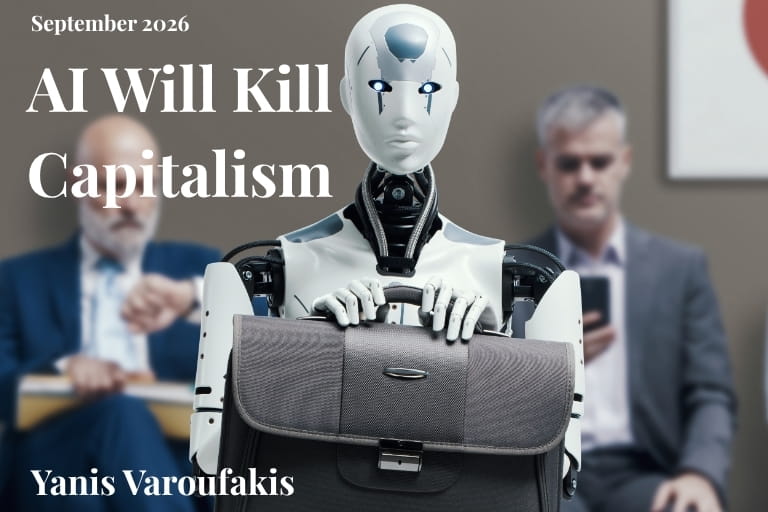
5 minute read. Will AI kill capitalism? Yanis Varoufakis, former Greek finance minister and University of Athens economics professor, explains why it might, and the implications.

4 minute read. Can better gut health mean better sleep? Sara Uceda Gutierrez and Manuel Reiriz Rojas of Nebrija University explore the connection and offer three practical tips.
7 minute read. Tim Christiaens of Tilburg University reviews Cecilia Rikap’s The Rulers, which argues Big Tech rules through intellectual monopolies — controlling knowledge, data, and cloud infrastructure without owning much at all.

5 minute read. Seven months in, no exit in sight. Amin Saikal of the Australian National University on why Trump is trapped in the Iran war.
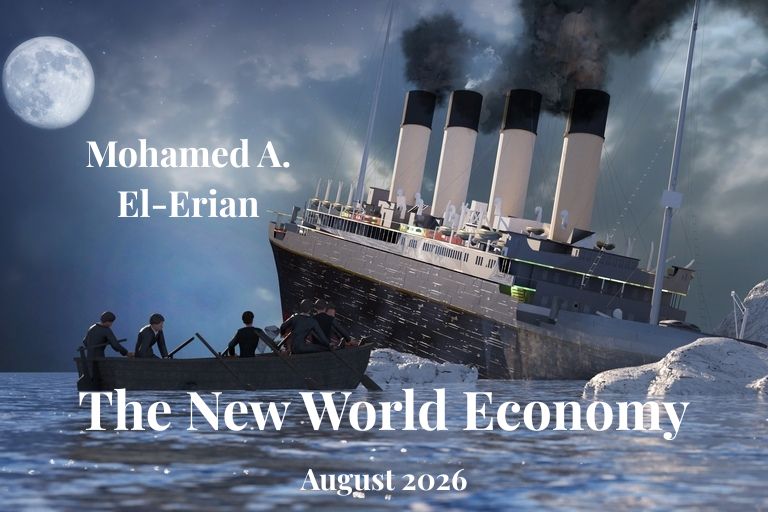
7 minute read. Allianz Chief Economic Adviser Mohamed El-Erian argues the global economy has entered a perpetual, directionless transition—and explains why resilience, agility, and optionality now beat any forecast.
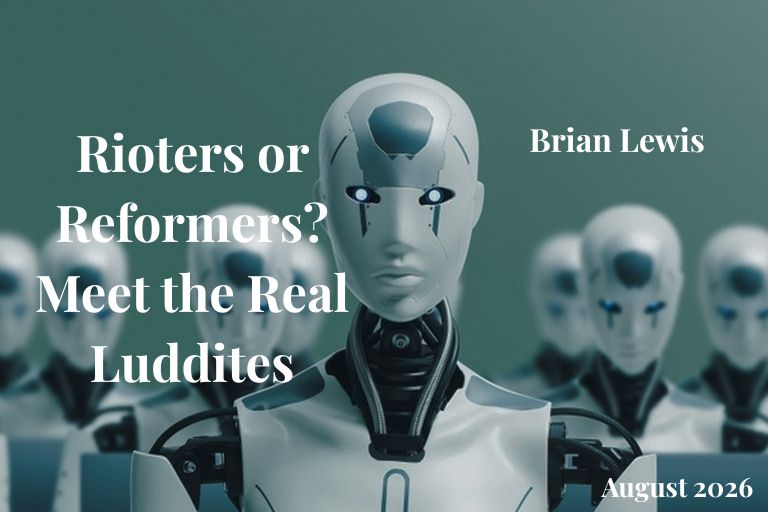
6 minute read. Rioters or reformers? Brian Lewis, Professor of History at McGill University, revisits the real story of the Luddites in the age of AI.
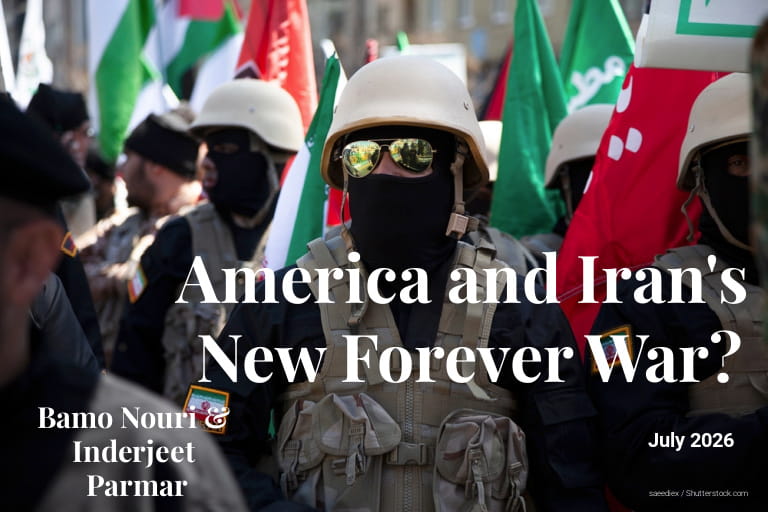
6 minute read. No invasion. No occupation. No end. Bamo Nouri & Inderjeet Parmar (University of London) on the new type of forever war Trump may have started.
6 minute read. With wildfire smoke and extreme heat impacting Canada, the U.S. and Europe, Farhan M. Asrar, MD (Toronto Metropolitan University), shares who’s most at risk and how to reduce exposure.
6 minute read. Is fascism liberalism’s own child? Political scientist Gábor Szabó reviews Žižek.
20 minute read. Drawing on decades of research, neuroscientist Christof Koch—longtime Caltech professor and Chief Scientist at the Allen Institute for Brain Science—examines what split-brain patients teach us about the divided mind.
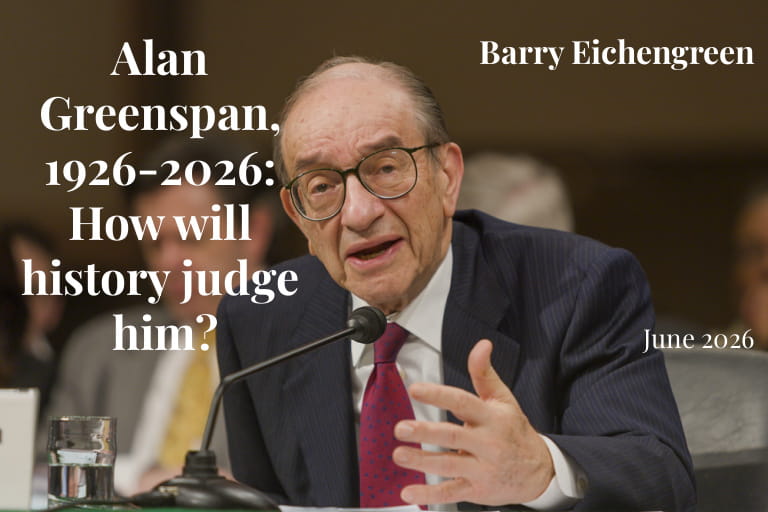
7 minute read. UC Berkeley economist Barry Eichengreen reflects on the death of Alan Greenspan at 100, and the mixed legacy of a Fed chair whose tenure vindicated much of what he opposed.
5 minute read. Leiden University’s Andrew Gawthorpe on Iran’s bid to build a new regional order, and why Israel and the US may be unable to stop it.
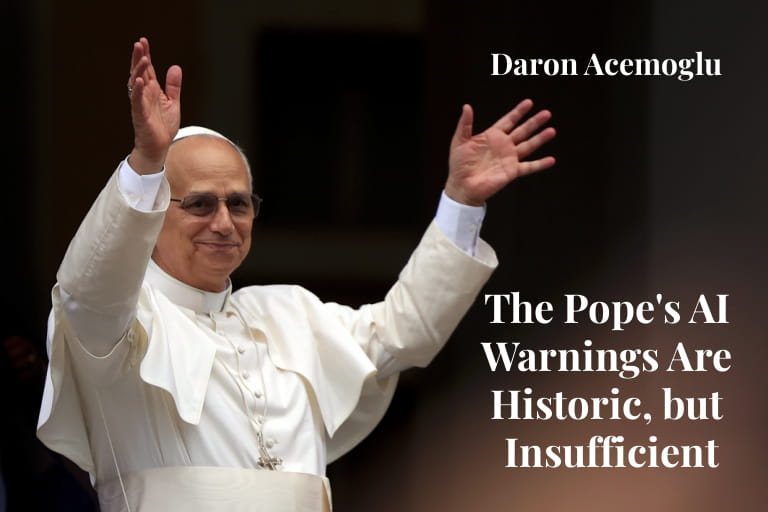
6 minute read. Nobel Prize–winning economist Daron Acemoglu of MIT says Pope Leo XIV’s AI encyclical is historic—but stops short of the real question: what should we be designing AI to do?
You don’t need to be Catholic to applaud Pope Leo’s war on AI. iDose Magazine Editor-in-Chief Aly Kamadia comments on the Pope’s historic call to action.