By Aly Kamadia, Editor-in-Chief, iDose Magazine
You don’t need to be Catholic to applaud Pope Leo XIV for declaring war on AI. Even the staunchest atheists might find themselves thanking God after digesting the Pope’s first encyclical.
The monumental ‘formal letter intended to guide moral, social and theological thought’ (i.e., encyclical) was unrelenting in its criticism of the path AI is taking.
The Pope took aim at the delusion that AI is merely neutral; proclaimed that technology can reduce creation (and thereby humanity) to objects of exploitation; indicted the growing concentration of wealth and technological power that dehumanizes people, reducing them to nothing more than data and economic functions.
That said, is the Pope’s declaration an actual war on AI?
Not in the sense that the Pope is attempting to stop AI from advancing. He believes, as anyone with even an elementary sense of morality does, that AI should serve humanity, rather than the few people controlling the technology. Some of them harbor visions that can only be characterized as evil.
And as someone who has long sympathized with the realist tradition in international relations, I’m mindful that the Pope operates without the hard realist ingredients of military and economic might, and thereby has no serious power.
But Pope Leo can act as a major player in shaping the public conversation. And within this domain, his words can easily be perceived as a declaration of war on AI.
The nature of that war, however, can be contested.
A notable example demonstrating this is Nobel Prize–winning MIT economist Daron Acemoglu, who welcomes the Pope’s intervention, but argues the attack on AI doesn’t go far enough.
If you want an introductory article on the topic, start with last week’s Pope Leo Warns of AI’s Risks to Humanity. For something more analytical and complementary, feel free to read Acemoglu’s analysis titled The Pope’s AI Warnings Are Historic, but Insufficient.
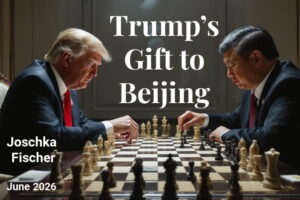
Two other recent iDose Magazine political pieces are worth noting: one arguing that even Western democracies are virtually controlled by the superrich (surprise, surprise), while the other examines China’s continued rise in light of the Trump-Xi summit.
Trump’s Gift to Beijing (latter article) is authored by a former German Foreign Minister and Vice Chancellor.
Beyond current affairs, many of our health-conscious readers will enjoy Probiotic Supplements: Should You Take Them?
Finally, for those of you with philosophical and scientific inclinations: all too often, scientists get ahead of themselves in declaring the meaning of their discoveries. This is sometimes perfectly reasonable (e.g., a newly discovered drug that relieves headaches is straightforward). But when we get to the more ‘big-picture’ sciences, cosmology among them, meaning is hardly the sole purview of scientists.
The door to interpretation remains wide open to philosophers (e.g., philosophers of science) and to others, including intelligent iDose Magazine readers.
Our most recent intellectual dose on philosophy is titled Richard Feynman was Wrong about Truth and Beauty in Science.
It’s a delight to read about a topic (philosophy) that is the most underrated subject in modern academia.
PS. Yes, yours truly is closely monitoring the US–Israel war with Iran.
aly@idose.org
June 2nd, 2026
Aly Kamadia is Founding Editor-in-Chief of iDose Magazine. He is also Director of Kamadia & Associates.
© All Rights Reserved