Q&A By Aly Kamadia, Editor-In-Chief, iDose Magazine
How did the most powerful military force in human history lose control of a war it started? Why is a distinguished airpower scholar saying the US and Israel have fallen into a trap of hubris? What does it mean that US military commanders across all branches of the armed forces are invoking the end times and religion as justification for war? How might religious factors relating to Judaism and Islam factor in? And how might two men who launched a war in the name of security end up giving birth to the very outcome they claim to oppose? As the US-Israeli war against Iran escalates (as of March 16th, 2026), the following Q&A by iDose Magazine Editor-in-Chief Aly Kamadia is indispensable.
What caused the US-Israeli War against Iran? Was it driven by Western hatred of Islam?
The most immediate cause of this catastrophic war can easily be summed up in one word: Netanyahu.
This is not to deny US President Trump’s primary role—by deciding that the US would not only participate, but take the lead in the war. Nor is it to pretend that there isn’t a rich historical context that factors in.
But it simply can’t be denied that Israeli Prime Minister Netanyahu was the primary immediate cause of this war.
As for the religious question, I am certainly not of the opinion that Western hatred of Islam is primarily driving the war. Though there are crucial religious elements at play involving Christianity, Islam and Judaism—which I’ll expand upon later in this Q&A.
What are US-Israeli objectives in this war? What are the Iranian objectives?
Trump’s so-called ‘objective’ in this war—despite being labeled as ‘Plan A’ by some very serious experts—resembled more of a fairy tale than even an elementary plan.
The US President thought that using American and Israeli airpower to assassinate Iran’s Supreme Leader Ayatollah Ali Khamenei, kill notable members of Iran’s political and military leadership, and bomb the hell out of key Iranian targets would instantaneously result in regime change.
Trump was so deluded that he sincerely believed the entire war would be concluded within a few days.
My understanding is that notable US military advisors were against the war, but in the end, their voices were eclipsed by the fanatics in the room—most notably, Netanyahu.
In contrast to Trump’s fairy tale of Iranian-regime-change-over-the-weekend, Israel’s core objective in this war is at least coherent.
Netanyahu’s primary goal is to weaken Iran to the point that they are neither able to threaten Israel nor even defend themselves as a sovereign country. Netanyahu would be (prematurely) dancing in the streets if the Iranian state completely collapsed and fragmented, and there was nothing but internal chaos.
In Netanyahu’s mind, Iranian state collapse is part of a broader goal of creating an Israel that is the most dominant player in the Middle East, and can act as it pleases.
Turning to Tehran, the Islamic Republic knew they were far too weak to take on Israel in a conventional war—let alone wage one against the most powerful military force in human history (i.e., the US).
Thus, they have predictably turned to asymmetric warfare. Iran is reacting to the US and Israel in ways where much weaker powers (i.e., Iran in this case) might gain the upper hand.
For instance, consider Iran’s tactical use of cheap unconventional drones. It’s dirt cheap to pay $4,000-$50,000 for using many low-cost drones, rather than launching one single multimillion-dollar missile of the sort that the US has used.
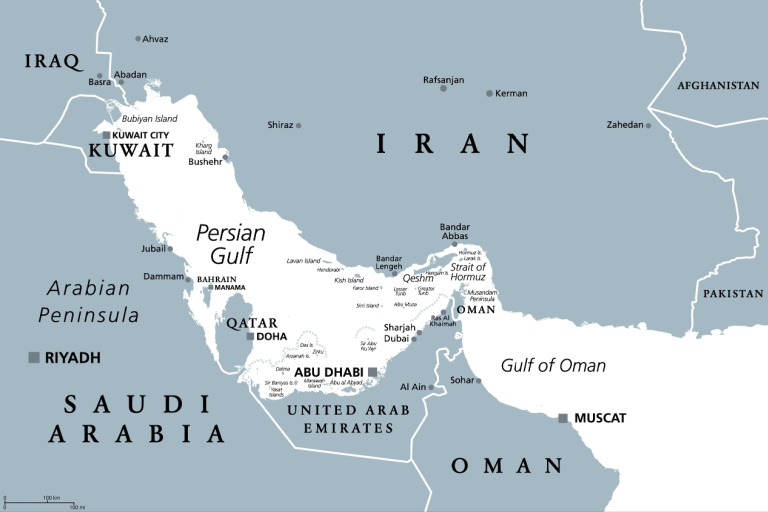
That said, the core strategic objective of Tehran couldn’t be clearer: survival. And the method to achieving survival is to make this war so costly for the US, Israel, the GCC and perhaps even countries beyond—financially, economically and politically.
To what degree are the US, Israel and Iran achieving their goals?
The US has completely lost control over the war.
It would be nice if Trump could simply declare victory, make some silly and fictional statements about defeating Iran and finally bringing democracy to the region, while perhaps insulting Biden, Clinton and Obama a bit before wrapping up this chaotic war.
But that is not a viable option because Iran is currently not willing to stop this war.
And despite the US tactical successes of killing the head of a sovereign state, key figures, and degrading vital Iranian military hardware (e.g., much of its navy), there are no signs of strategic victory. There is absolutely no evidence that Iran is on the way to regime change.
Indeed, Trump has the distinct honor of unleashing unmatched military power against Iran for regime change, which in reality has led to replacing Khamenei with Khamenei (i.e., the late Supreme Leader with his son).
Israel’s story is a bit mixed, again, because they have a coherent objective. Weakening Iran’s conventional military power significantly might be viewed as a major success by Israel. But the question of whether the state will collapse lingers, and the experts I’ve come across currently view such an outcome as highly unlikely.
Moreover, two questions are worth asking.
Is the total collapse of the Iranian state desirable from an Israeli perspective?
Scholar and former Israeli Foreign Minister, Shlomo Ben Ami, offers a critical assessment:
If the Islamic Republic eventually does fall, there is little reason to expect an orderly transition to a more moderate government. Far more likely is a descent into chaos, extremism, and violence. Whatever radical groups do emerge may well end up in possession of Iran’s nuclear material – a risk that no international agreement could contain. A nuclear Iran would also trigger a regional nuclear-arms race, with countries like Turkey and Saudi Arabia rushing toward the bomb.
Next, by starting this new war, what is Israel achieving in terms of its ongoing relationship with the most powerful country in the world?
Ever since Netanyahu prosecuted his ‘plausible genocide’ on Gaza, support for Israel among the American public (as opposed to the American political class), has deteriorated markedly. For instance, an NBC news poll indicates that while in 2023, 47% of registered American voters viewed Israel positively, the number in 2026 has dropped drastically to 32%.
Adding pressure to Israel is the sort of results uncovered in a recent Quinnipiac University National Poll, which found that the majority of US voters opposed the current Iran war (53% oppose, while 40% support; Trump has another distinct honor of being the first American president to start a major war that the majority of Americans opposed), while an absolutely astounding 74% of US voters oppose sending US troops on the ground.
If you’re an Israeli planner, and you know that your country is already isolated, a question that you must ask is how much of your future American support will be negatively impacted by adding this new Iran war to the ‘plausible genocide’ in Gaza.
Finally, Tehran has actually surprised serious experts in its reaction to the US-Israeli assault.
Notable specialists were acutely aware that Tehran had been planning for this sort of attack by the US and Israel for decades.
Nevertheless, the speed with which Tehran reacted by launching attacks against US military bases in GCC countries (expanding the geographic theater of the war at virtually the snap of a finger), and the rapid pace in which a new Supreme Leader was selected caught even many experts off guard.
And if I have yet to see any serious reports of internal protests against the Iranian government, one reason for this is obvious. Irrespective of how much some Iranians hate their government, one can make an educated guess that what they despise much, much more are American and Israeli jets bombing the hell out of their ancient civilization, and appearing to destroy it.
Worth mentioning here is the distinguished University of Chicago scholar Robert Pape. Famous for writing what some scholars consider the most authoritative book on airpower, Pape has advised a number of American presidents. Most recently, not only has he been going around the media and stating that US and Israeli airpower has led them into a trap (air superiority giving Americans the delusion that they are in control), but in his most recent appearances, he has stated on multiple media networks that Iran is actually more powerful right now than it was when the war began.
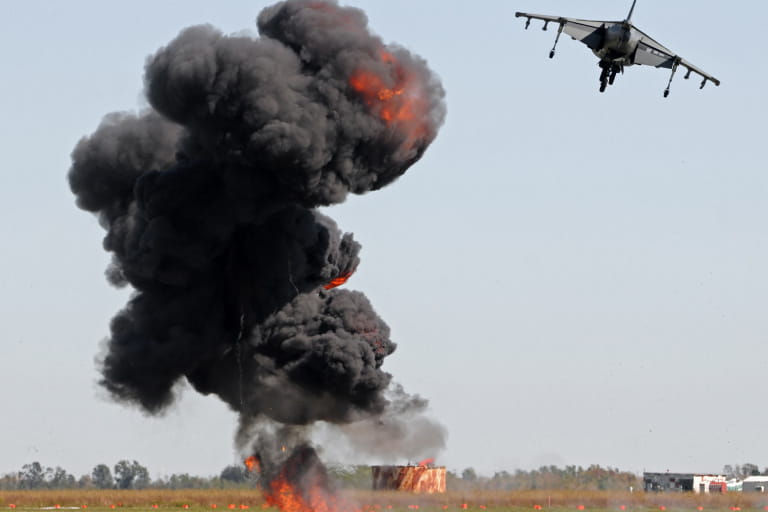
Even if one disagrees with Pape’s assessment on Iran’s power, it’s hard to deny that Iran has taken significant control of the war.
The most prominent concern for the world is Iran’s effective closure of the Strait of Hormuz—a very critical chokepoint that handles 20% of the world’s daily oil and liquefied natural gas supplies.
Effectively closing it has given Iran enormous leverage.
And American options of attempting to take control of the Strait are extremely far from ideal. Thus, the panic and rage Trump has been channeling in trying to force many countries to send military assets there immediately. (All of whom, including US Western allies, have declined Trump’s request at the time of this writing.)
Considering Iran’s strategic objective has nothing to do with conventionally winning this war, but rather, survival, the logical conclusion is that they are currently achieving their main objective.
Earlier you stated that while religion was not primarily driving this conflict, there was some role that it played?
Within the context of a Western world that has evolved to become highly secular, I’m not surprised that some people brush aside the idea that religion is playing a role in the current war.
But how do people with this view respond when they learn that a notable foundation stated that, within the first few days of the war, it received more than 200 complaints that extremist Christian rhetoric about the ‘end times’ and ‘return of Jesus’ was being used by US military commanders “across all branches of the armed forces, including the marines, air force and space force”? (See the formal complaint to Congress and demand for investigation here.)
How do skeptics of religious involvement respond when they learn that the current US Secretary of Defense, Pete Hegseth, stated that, “The providence of our almighty God is there protecting those troops, and we’re committed to this mission…”?
How do they respond when US Senator Lindsey Graham publicly states that, “This is a religious war… We will determine the course of the Middle East for a thousand years.”
How do they respond when the Christian Zionist and US Ambassador to Israel, Mike Huckabee, publicly states that Israel has a Biblical right to take over the entire Middle East, and states that, “It would be fine if they [Israel] took it all [Middle East], but I don’t think that’s what we’re talking about here today”?
What do those that deny religion’s involvement in the war say when they consider that a few days into the war on March 2nd, Netanyahu publicly proclaimed:
But we are acting here together with the US, in the name and for the sake of all humanity. In this week’s Torah portion, we read ‘Remember what Amalek did to you.’ We remember and we act.
(Per The Nation, where this quote is sourced from, the next few sentences read:
“Amalek, in the Torah, is described as one of the nations that fought against the Israelites. In the Bible, the prophet Samuel tells the Israelite King Saul that God wants him to “go and destroy Amalek. Destroy all they have, and do not let them live. Kill both man and woman, child and baby.”)
What are the political implications, if any, when one considers that the US and Israel began this war during a period that 2,000,000,000 Muslims consider the holy month of Ramadan?
The fact that some Iranians hate their government, and weren’t fond of Ayatollah Ali Khamenei is well known. Nevertheless, what are the political implications for the US and Israel of assassinating a religious and spiritual leader to millions of followers inside and outside of Iran?
While discussing the broader topic of anger among Muslims (March 14th), the distinguished scholar Vali Nasr (Johns Hopkins) recently stated:
“I’m worried about the anger, the collective anger in the Muslim world, from Gaza to Iran. I mean, there’s a sense in the region, you could go online and see there is now a wave of saying Shias and Sunnis [the two major branches of Islam] are brothers, they’re in this fight together. And then across the Muslim world this anger that started with what happened in Gaza, it’s only building up, and I believe anger at some point has to manifest itself. It cannot be that you can batter this [Iranian] regime and do this kind of injustice to it.”
The idea that notable amounts of Shia and Sunni Muslims are putting aside their differences is as astounding as it is instructive—particularly for completely out of touch leaders who don’t understand the first implications of what’s going on in the lives of ordinary people. (On a side note, Nasr is not only a distinguished scholar at Johns Hopkins, but his service in US government included being a senior advisor to the late Ambassador Richard Holbrooke.)
While I take the view that the primary cause of this conflict, at least from Israel’s perspective, is much more about regional domination and power, the fact that there are dangerous religious elements that factor into this war is perfectly obvious.
Where do you see the conflict going from here?
On one hand, I’ve seen a few commentators making medium to long-term forecasts that I pay no attention to. These tend to be either too general, driven by weak arguments, or a combination thereof.
On the other hand, I have seen responsible and very highly knowledgeable people laying out plausible scenarios for how this war may unfold in the medium to long term. Insofar as you’re reading or listening to serious people, a great side-effect of these conversations is that they can be immensely elucidating—they can educate the reader/listener in a valuable way. They are also crucial for national security reasons.
That said, when it comes to human affairs, including wars of this nature, I’m of the opinion that there are far too many variables at play to forecast anything with a high degree of precision—perhaps more notably for the medium to long run.
However, I will look into the crystal ball and make one general observation.
If I were in the shoes of anyone with serious power in Iran, the Arab world or any other Middle Eastern country (and remember, we must put ourselves in other people’s shoes if we are trying to get a sense of where they are headed), I would be pushing extremely hard for my country to develop a strong nuclear deterrent in the medium to long term.
The fact that Israel is pursuing regional domination, and is the only country in the region with nuclear capabilities would not sit well with me, nor my conception of what the national security of my (hypothetical) country ought to look like.
This sort of thinking leads to a remarkable observation.
The two US and Israeli men who launched this war against Iran in the name of security, may well go down in history for giving birth to nuclear proliferation in various parts of the Middle East.
Which is quite the achievement, even by the laughably abysmal standards of Trump and Netanyahu.
© All Rights Reserved
Aly Kamadia is Editor-In-Chief of iDose Magazine. Kamadia holds an Honors BA & MA in Political Science, both from the University of Waterloo, Canada. He currently serves as Director of Kamadia & Associates. To read selected articles by Kamadia, click here.